

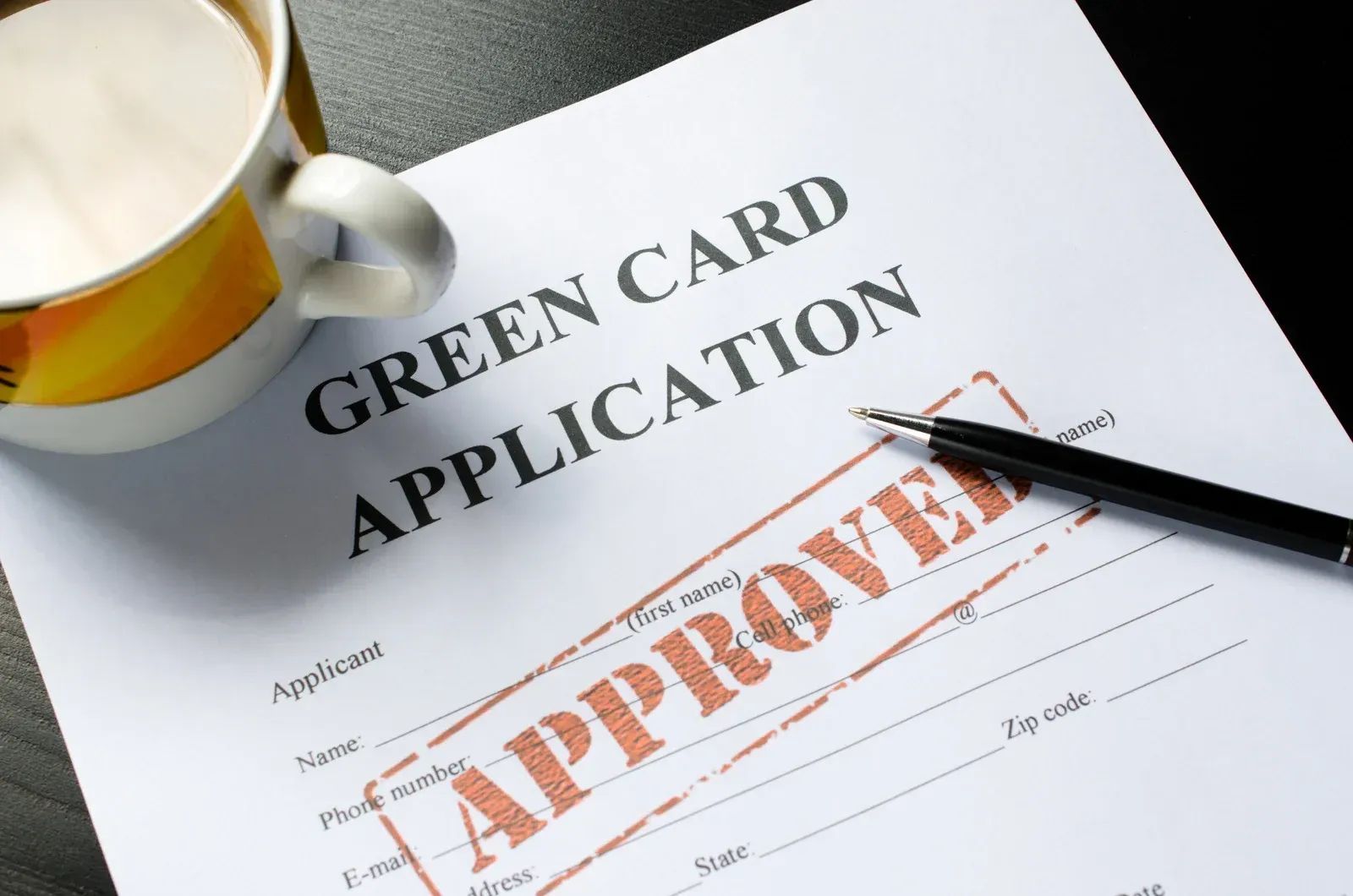

Marriage-Based Green Card Interview: What the Appointment Actually Involves

August 10, 2026

QUICK ANSWER: Your marriage-based green card interview is where a USCIS officer confirms your identity, reviews your Form I-485, and asks questions to decide whether your marriage is real. Most interviews happen at a local field office and run 20 to 40 minutes, with both spouses answering together unless the officer chooses to split you up. Bring originals of every document you filed, plus current proof of shared life. Some couples get a decision the same day; many wait several weeks, and in some cases up to 120 days. If the officer needs more before deciding, USCIS typically follows up in writing rather than denying on the spot — though how serious that follow-up is can vary.


You've filed the paperwork. You've sat through the biometrics appointment. Now a notice in the mail is telling you and your spouse to show up at a USCIS field office. That's the marriage-based green card interview, and for most couples, it's the last real hurdle between the application and the card itself.


Attorneys who've sat across the table from plenty of nervous couples in Montgomery County will tell you the same thing: most people picture the interview as some kind of interrogation. It usually isn't. But it is a legal proceeding with real consequences, and knowing what the officer is actually looking for changes how you get ready for it. This article walks through the process step by step. Consider it general legal information rather than advice for your specific case — every file has its own wrinkles, and an attorney who has actually reviewed your paperwork can flag where yours might need extra attention

How You Get to the Interview Stage

Married a U.S. citizen and living in the United States? Your path usually runs through adjustment of status. Your spouse files Form I-130 to establish the relationship, you file Form I-485 to apply for the green card, and USCIS schedules a biometrics appointment before any interview notice arrives. That biometrics stop collects fingerprints and a photo for background checks. It doesn't move your case forward on its own — it's a separate box that has to get checked.


Federal regulation requires an interview for adjustment applicants unless USCIS decides one isn't necessary. Spouses of U.S. citizens almost always get interviewed. The waiver categories that skip an interview are narrow — unmarried children of citizens who filed on their own, parents of citizens, a handful of similar situations. Married couples aren't on that list. Plan on attending.


Married abroad, with your spouse petitioning you in from outside the country? Then your interview happens at a U.S. embassy or consulate through consular processing instead of a USCIS office. The questions and documents overlap heavily with the domestic process, but the setting and a few procedural steps differ. Ask your attorney which track applies to you, because prep looks a little different for each.

What the Officer Is Actually Trying to Find Out

Strip away the paperwork and the interview comes down to one legal question: did you enter this marriage to build a life together, or to get an immigration benefit? USCIS calls this the bona fide marriage standard. It drives almost every question you'll hear that day.


The officer isn't trying to trip you up for sport. They're comparing what's in your file against what comes out of your mouth — and against what your spouse says separately, if the interview gets split. Small inconsistencies rarely sink a case by themselves. A pattern of them, especially on basic facts like where you live or how you split bills, is what gets flagged.


Identity and biographic facts

Names, birthdates, prior marriages, the address on your I-485. This part is mechanical — the officer confirms the person in front of them matches the file.


Relationship history

Where you met, how things moved, who proposed, what the wedding looked like. If your courtship was quick or your wedding was small and private, just say so. A modest relationship timeline isn't a red flag on its own. A vague or shifting account of one is.


Shared life today

Lease or mortgage details, who's on which bills, how expenses get split, recent joint bank activity. Officers don't count how many documents you brought. They're checking whether what's on paper matches what you say out loud when asked cold.

What to Bring With You

Bring originals of everything you submitted with your I-485 — passports, birth certificates, marriage certificate, any prior divorce decrees. USCIS treats the civil marriage certificate as your primary proof of the relationship. That one document won't carry the interview by itself, though. Pair it with current evidence: recent lease or mortgage statements, joint bank statements, utility bills in both names, insurance documents listing each other, and photos that show ordinary shared life rather than a single event years ago.


If Form I-864, the Affidavit of Support, is part of your case, be ready to talk through the household income and assets behind it. The officer may also ask about employment, recent travel, and any prior immigration issues or entries without inspection. Answer what you actually know. If you don't remember a detail, say that instead of guessing — a wrong guess reads worse than an honest "I'd have to check."

TIP: Build a one-page household summary before your interview date — current address, lease or mortgage start date, utility providers, and the last four digits of shared accounts. It won't replace the actual documents, but it keeps your answers steady if nerves make you blank on a specific number in the room.

What Happens Inside the Interview Room

Most interviews start with both spouses together. An officer places you under oath, reviews your I-485 line by line, and gives you a chance to correct or update anything that's changed since filing — a new address, a new job, a name spelled wrong on the form. If something needs fixing, you'll typically re-sign the application at the end of the appointment.


From there, the officer works through the relationship and household questions covered above. Interviews for simple cases with strong documentation often wrap up in well under an hour. If the officer has doubts about the marriage, they may separate you and your spouse and ask each of you the same questions independently, then compare notes. This happens far less often than online forums make it sound, and it isn't a sign your case is doomed. It's a tool the officer reaches for when something in the file calls for a closer look.


An interpreter can attend if either of you isn't comfortable answering in English. USCIS requires the interpreter to translate word for word without adding commentary, and the agency can decline to use one it doesn't trust to do that accurately.

After the Interview — Approval, RFE, or Further Review

Some interviews end with an approval on the spot, and you walk out already knowing the card is coming. Others end with the officer saying the case needs more review — sometimes because a document was missing, sometimes because a supervisor has to sign off, sometimes because the officer wants to check one more thing before deciding.


If USCIS isn't ready to approve, it generally follows up in one of two ways, and the difference matters. A Request for Evidence (RFE) means the file is missing something — a document, an update, a clarifying detail — and doesn't by itself suggest the officer doubts the marriage. A Notice of Intent to Deny (NOID) is a more serious step: it means the officer has already leaned toward denying the case, often after inconsistent answers or a follow-up "Stokes" interview, and it comes with a shorter deadline to respond, typically 30 days plus a few for mailing. Both give you a chance to submit more before a final decision — but a NOID response needs to directly address the officer's stated concerns, not just add paperwork. Whichever one you receive, calendar the deadline the day it arrives; missing it can end with a denial based on what's already in the file.


USCIS can also deny a case outright without an RFE or NOID, though this is uncommon in marriage-based cases and usually reserved for filings with no legal basis for approval — situations no amount of additional evidence would fix. For most couples with a genuine marriage and a reasonably complete file, that outcome isn't the one to plan around; an RFE, or occasionally a NOID, is the more realistic scenario if the case doesn't resolve at the interview itself.

Frequently Asked Questions

  • How long does a marriage-based green card interview last?

    Most run 20 to 40 minutes for simple cases with solid documentation. Cases with inconsistencies, missing evidence, or a need for a separate interview can take longer and sometimes require a follow-up appointment.

  • Can USCIS deny a green card based on marriage without an interview?

    No. Federal regulation requires an interview for adjustment applicants unless USCIS specifically waives it, and spouses of U.S. citizens generally aren't in the categories USCIS waives. Expect to attend one.

  • Do we have to answer questions separately from each other?

    Not usually. Most couples are interviewed together. An officer may separate you if something in the file raises questions about the marriage's authenticity, but that's the exception, not the standard procedure.

  • What happens if we get an RFE after the interview?

    USCIS mails a written notice describing exactly what's missing and the deadline to respond. Respond by that deadline with the requested evidence. Missing it can lead to a denial based on the existing record.

  • Is a green card from a marriage interview permanent right away?

    Only if you'd been married two years or more when the card was issued. Married less than two years? The card is conditional for two years, and you'll file Form I-751 later to remove that condition.

  • Can we bring an interpreter to the interview?

    Yes. If either spouse isn't comfortable in English, an interpreter can attend and must translate word for word without adding opinions or extra commentary. USCIS can decline an interpreter it believes isn't doing that accurately.

Preparation Makes the Interview Process Feel Manageable

A marriage-based green card interview is easier to approach when both spouses understand the process and review their paperwork beforehand. Bringing updated documents, knowing the information submitted to USCIS, and answering questions clearly can help prevent unnecessary confusion. Couples should focus on providing truthful, consistent information about their relationship and shared life rather than trying to memorize responses. With proper preparation, the appointment becomes a straightforward opportunity to confirm the information already provided throughout the immigration application process.


For families in Lansdale, PA, experienced legal guidance can also provide clarity when unusual circumstances, missing documentation, prior immigration concerns, or conditional residency issues are involved. Ibrahim & Dobaria Law, PLLC brings 45 years of experience helping individuals and families understand important immigration procedures and prepare for significant case milestones. Every marriage-based application has its own history, but understanding what USCIS expects and keeping supporting evidence organized can make the interview feel considerably more predictable, structured, and manageable.

Judge’s gavel on a reflective desk in front of law books and scales of justice
July 4, 2026
A Request for Evidence (RFE) is a notice from USCIS asking for more information or documents before it decides your green card case. It is not a denial and it is not a rejection, it means the officer needs more to make a decision. An RFE comes with a deadline and lists what is being requested, and responding completely
Gavel beside a sign reading “DEPORTATION” on a courtroom desk
June 8, 2026
Facing deportation proceedings can be one of the most stressful and life-changing experiences for an individual or family. Removal proceedings often create uncertainty about employment, family stability, finances, and future opportunities.

Paper family cutouts beside a gavel, pen, and coins on a table, suggesting family law or custody decisions
May 5, 2026
Navigating a child custody hearing can be one of the most challenging experiences for any parent. These hearings determine not only the legal responsibilities of each parent but also the day-to-day lives and well-being of children.
Judge’s gavel on a reflective desk in front of law books and scales of justice
July 4, 2026
A Request for Evidence (RFE) is a notice from USCIS asking for more information or documents before it decides your green card case. It is not a denial and it is not a rejection, it means the officer needs more to make a decision. An RFE comes with a deadline and lists what is being requested, and responding completely
Gavel beside a sign reading “DEPORTATION” on a courtroom desk
June 8, 2026
Facing deportation proceedings can be one of the most stressful and life-changing experiences for an individual or family. Removal proceedings often create uncertainty about employment, family stability, finances, and future opportunities.
Paper family cutouts beside a gavel, pen, and coins on a table, suggesting family law or custody decisions
May 5, 2026
Navigating a child custody hearing can be one of the most challenging experiences for any parent. These hearings determine not only the legal responsibilities of each parent but also the day-to-day lives and well-being of children.